
A coach jacket is one of those pieces that quietly earns its place in almost any closet: light enough to grab on your way out the door, structured enough to look intentional, and simple enough to pair with nearly anything you already own. If you have been eyeing a coach jacket as an affordable layer that works across seasons and settings, the appeal makes sense. At JCR-1, our whole approach centers on value-focused outerwear and everyday apparel, so this guide walks through what a coach jacket actually is, how to judge quality against price, and how to match one to the way you really live.
The short version: a coach jacket is a lightweight, snap-front jacket with a flat pointed collar, a relaxed fit, and usually elastic or ribbed cuffs. It sits between a windbreaker and a casual overshirt, which is exactly why it flexes across campus, commute, weekend, and outdoor use without feeling out of place. Below, we break down the design, the buying criteria that matter most, and a practical, use-case-first way to shop so you spend on the features you will actually notice.
Table of contents
- What a coach jacket actually is
- The value equation: where your money goes
- Best value picks by wardrobe scenario
- How to shop the JCR-1 way
- Care, longevity, and getting your money's worth
- Frequently asked questions
What a coach jacket actually is
The coach jacket takes its name from mid-twentieth-century American sideline coaches, particularly in baseball and football, who needed a light, wind-resistant layer that let them move freely during long games and practices. That functional brief shaped everything about the silhouette. The flat, pointed collar, the snap-button front instead of a zipper, and the boxy cut all trace back to the priorities of standing outdoors for hours and pulling the jacket on and off quickly.
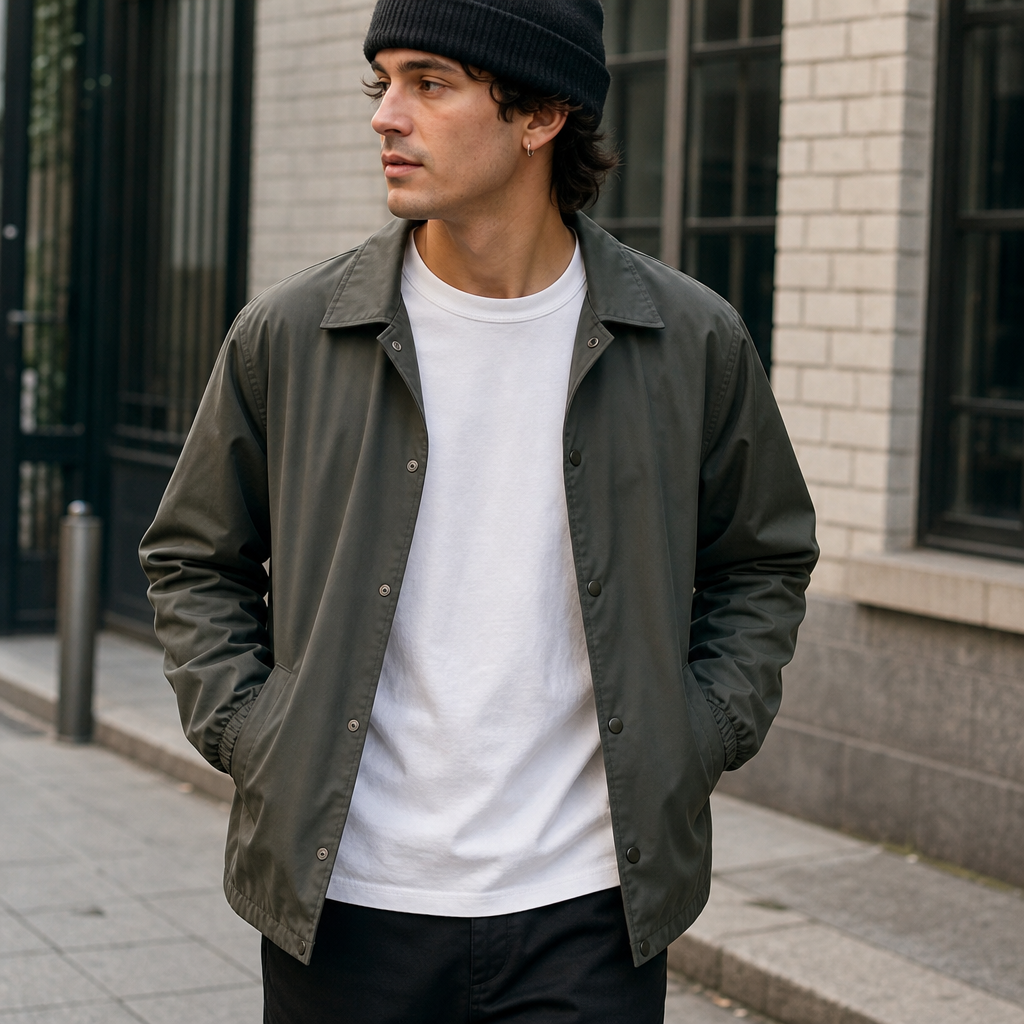
From that athletic role, the coach jacket migrated into everyday and streetwear rotation, where it became a staple casual layer. The reasons are practical rather than trend-driven. It is unlined or lightly lined, so it packs down small and layers cleanly over a T-shirt, hoodie, or light knit. The relaxed fit is forgiving. And the clean front, free of bulky hardware, reads as tidy rather than technical.
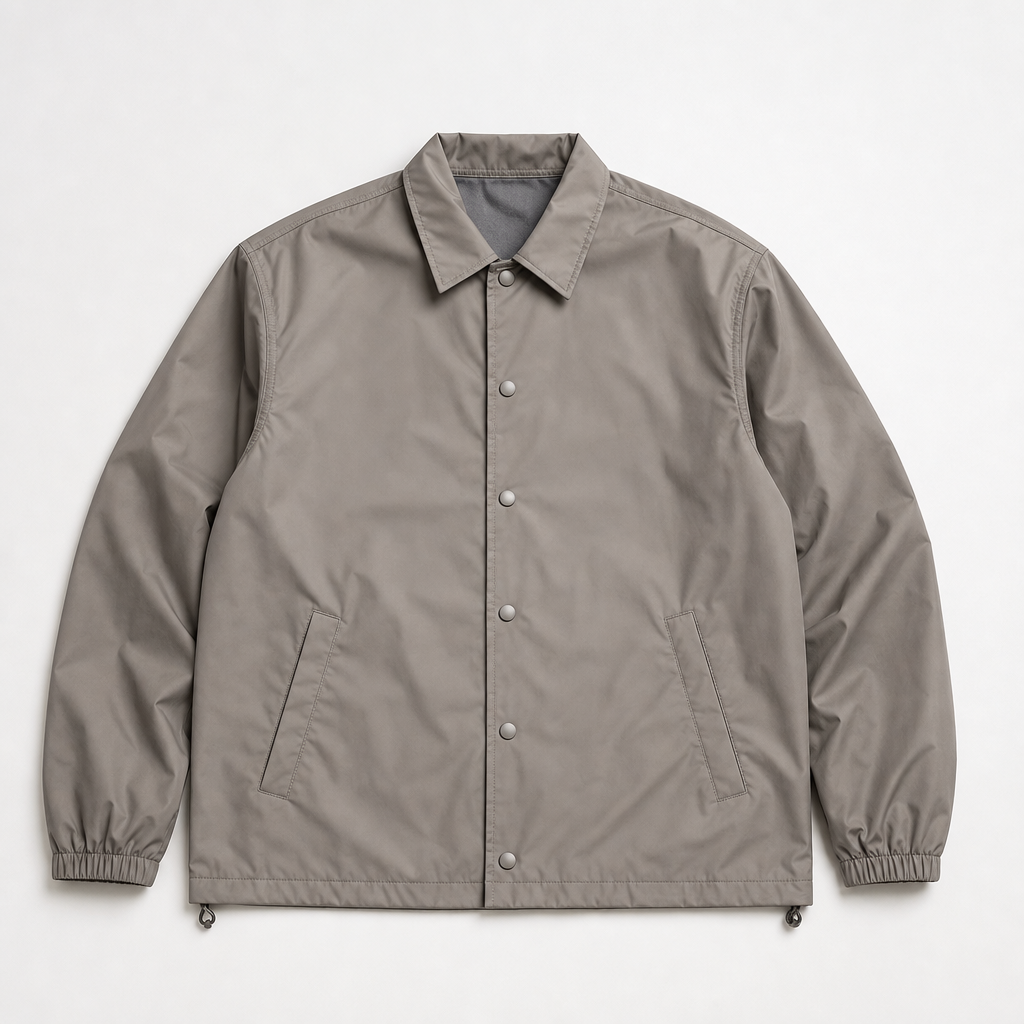
A few defining features show up on almost every genuine coach jacket, and knowing them helps you recognize a good one at a glance:
- Snap-front closure rather than a zipper, for a quick on-and-off and a smooth, uninterrupted front.
- Flat, pointed collar that sits close to the neck without a hood or storm flap.
- Relaxed, boxy fit built to layer over other garments comfortably.
- Elastic or ribbed cuffs and often a drawstring hem to help seal out wind while keeping movement easy.
- Nylon or polyester shell, frequently a taffeta-style weave, sometimes with a cotton or flannel lining.
The most common construction pairs a nylon or polyester shell with either no lining or a light cotton or flannel lining. That combination is deliberate: it keeps weight and bulk down, keeps the price accessible, and delivers light wind protection with moderate water resistance. What it is not is a technical, expedition-grade weatherproof shell. Coach jackets are built for drizzle and gusts, not sustained storms, and understanding that boundary is central to getting real value from one.
The value equation: where your money goes
"Best value" is not the same as "cheapest." A value-focused coach jacket is one where the fabric, lining, fit, and finishing all match how you intend to wear it, so you are not overpaying for performance you will never use or underpaying into something that fails in month two. Four factors drive that equation, and each one has a clear tradeoff.
Shell material. Nylon and polyester shells are the classic choice. They are lightweight, packable, and typically offer better water resistance, which suits wind and light rain. Cotton or wool-blend shells lean more toward style and warmth than weather protection, and they usually sit at a higher price. For a first coach jacket meant to earn its keep, a nylon or polyester shell tends to deliver the most everyday usefulness per euro.
Lining. This is the single biggest comfort variable across seasons. An unlined coach jacket is ideal for warmer weather and for layering, because it stays thin and breathable. A flannel or cotton lining adds noticeable warmth for cooler days, at the cost of some packability. If you live somewhere with real shoulder seasons, matching the lining to your climate matters more than almost any other spec.
Fit and silhouette. The standard cut is boxy and relaxed, designed to sit comfortably over other layers. A slightly more tailored version reads better in a smart-casual office, while a looser cut leans streetwear and athletic. Because these jackets are made to layer, sizing guidance is genuinely useful: knowing whether a jacket runs oversized, true to size, or slim tells you how it will look over a hoodie versus a plain tee.
Functional details. Snap fronts, elastic cuffs, and a drawstring hem are not decoration. They are what let the jacket seal against wind and still move with you. Simple hand pockets round out the practical set. When a listing spells out the shell material, lining, and these details clearly, you can judge value confidently instead of guessing.
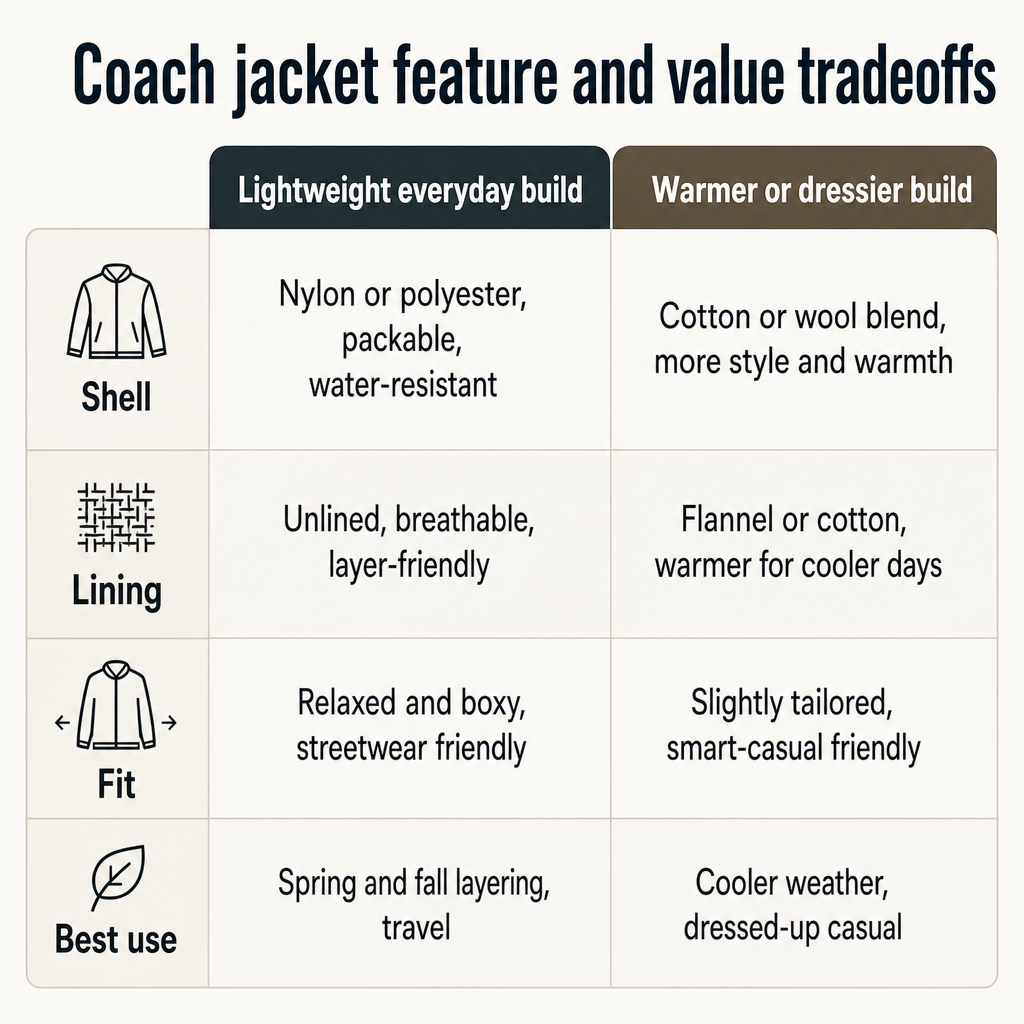
One honest note on price context: budget-friendly nylon coach jackets with light linings and snap fronts are widely available at accessible price points, which is exactly why the category rewards cost-conscious shoppers. Premium versions using wool blends, distinctive patterns, or designer branding move into mid-range and higher pricing. Neither is inherently better value; the better value is the one whose features match your actual use.
Best value picks by wardrobe scenario
Rather than chase specific model names, it is more useful to shop by scenario. The coach jacket's versatility means the same silhouette adapts to very different lives with small changes in fabric, lining, fit, and color. Here is how the ideal choice shifts across four common wardrobes.
Campus and casual streetwear
For day-to-day student life and casual streetwear, lean into the relaxed, boxy cut and a nylon or polyester shell. This is the jacket you throw over a hoodie between classes, so an unlined or lightly lined version keeps it breathable and easy to stuff into a backpack. Solid neutral colors and a logo-light design maximize how many outfits it pairs with, which is the practical definition of value when your rotation is heavy and your budget is tight. The snap front and elastic cuffs handle campus wind well enough without turning it into a technical shell.
Commuter and smart-casual office
If you want a coach jacket that reads a little more put-together, prioritize a slightly more tailored cut over the loosest streetwear fit, and stick to clean, dark, or muted colors. The same lightweight construction still works, but the goal is a layer that looks intentional over a collared shirt or light knit on the commute. Pairing a coach jacket with business casual apparel is a natural move here, and it is one reason a store that carries both categories can simplify the decision. A polyester or nylon shell keeps you covered against a drizzle on the walk from the station without the bulk of a heavier coat.
Weekend and travel layering
Travel is where the coach jacket's packability really pays off. An unlined nylon shell weighs little, folds flat, and shrugs off light rain and wind, which makes it an easy carry-on companion for shoulder-season trips. The drawstring hem helps you cinch out gusts on an exposed platform or seafront, and the snap front means quick adjustments as temperatures shift through the day. For weekends, the same jacket flexes from errands to a casual dinner with nothing more than a change of what is underneath.
Outdoor event and sideline style
This is the coach jacket coming full circle to its origins. For games, practices, and outdoor gatherings, the light wind protection and free range of movement are exactly what the design was built for. Here a light lining can be worth the small tradeoff in packability if you expect to stand around in cooler air. Keep expectations calibrated: this is protection against wind and light moisture, not a substitute for a proper rain shell in sustained downpours. Within that boundary, few affordable layers do the sideline job as comfortably.
How to shop the JCR-1 way
JCR-1 is a value-focused online store that spans several everyday categories, including outerwear alongside casual apparel, lifestyle items, and even audio gear. That breadth is the point: instead of hopping between specialist sites, you can shortlist a coach-jacket-style layer and pick up complementary pieces in one place, which keeps shipping and checkout simple. Because we position around discounted, sale-priced goods rather than luxury heritage, the natural fit for us is the affordable, practical end of the coach jacket spectrum.
A sensible way to move from browsing to buying looks like this:
- Start with your primary use and budget. Decide first whether this jacket is mainly for commuting, campus, travel, or outdoor events. That single choice narrows shell, lining, and fit faster than scrolling ever will.
- Filter our outerwear by shell and lining. Nylon or polyester for weather resistance and packability; cotton or wool blends when style and warmth matter more. Then choose unlined for warmer layering or a flannel or cotton lining for cooler days.
- Check the fit and the color logic. Match the silhouette to your scenario, and favor solid neutrals if you want the jacket to work across many outfits.
- Confirm the classic features. Look for the snap front, elastic or ribbed cuffs, and drawstring hem so what you buy actually behaves like a coach jacket rather than just resembling one.
Before committing, it helps to shortlist two or three jackets whose specifications line up with the classic profile and compare them side by side on material, lining, fit, and price. If a listing is specific about shell fabric and construction, you can trust your judgment; if key details are missing, treat that as a reason to keep comparing. To ground your expectations, the neutral definition of a coach jacket as a lightweight, snap-front, collared layer is well documented in independent references such as the Team Sunday glossary entry on coach jackets and a broader style overview from the Birmingham Journal coach jackets guide.
One practical honesty check for any value retailer, ours included: verify shipping options, return terms, and regional availability at checkout before you buy, since those details can vary by market. Getting clarity there is part of a confident purchase, especially when you want the jacket in time for a specific season.
Care, longevity, and getting your money's worth
Value does not end at the point of sale. A coach jacket that lasts several seasons is a far better deal than a slightly cheaper one that pills, fades, or loses its water resistance after a handful of washes. The good news is that the same simple construction that keeps these jackets affordable also makes them easy to look after.
Because most coach jackets use nylon or polyester shells, they generally respond well to gentle laundering, but the shell material and any finishing determine the specifics, so the care label is the authority to follow. Water resistance in this category comes from the fabric weave and any surface finish rather than a heavy membrane, which means aggressive washing and high heat are the fastest ways to degrade it. Washing less often, on cooler settings, and air drying tends to preserve both the finish and the shape.
A few habits stretch the life of a coach jacket meaningfully:
- Store it on a hanger or folded flat so the relaxed cut keeps its line instead of creasing at the shoulders.
- Spot-clean small marks rather than running a full wash for every minor spot, which reduces wear on the shell.
- Respect the weather boundary. Treating a light coach jacket as a full storm shell soaks the fabric and shortens its life; save it for wind and light rain, and it will keep performing.
- Re-cinch and adjust rather than force. The drawstring hem and snap front are there to fine-tune fit; using them is easier on the seams than stretching the jacket to compensate.
Matched to the right use and cared for simply, an affordable coach jacket delivers exactly what makes the category so enduring: a clean, flexible layer that quietly works across most of your week without demanding much in return.
Frequently asked questions
What is the difference between a coach jacket and a windbreaker?
They overlap, but a coach jacket typically has a snap-button front, a flat pointed collar, and a more relaxed, casual-overshirt feel, while a windbreaker leans more purely functional and often uses a zipper and hood. A coach jacket sits between a windbreaker and a casual overshirt, which is why it reads as more of a style piece even though it shares the same light wind-resistant intent.
Is a coach jacket waterproof?
No. Coach jackets are built for light wind protection and moderate water resistance from their nylon or polyester shell, not for sustained rain. Water resistance depends on the specific fabric and finishing, so check the shell material and care details. For steady downpours, a dedicated waterproof shell is the better tool; for drizzle and gusts, a coach jacket is well suited.
What should I wear a coach jacket with?
It layers cleanly over T-shirts, hoodies, and light knitwear, which makes it a transitional-season favorite. Solid neutral colors and logo-light designs give you the most outfit flexibility across streetwear, smart-casual, and athleisure looks. A slightly tailored fit dresses it up for the office, while a looser cut leans more casual and athletic.
How should a coach jacket fit?
The classic cut is boxy and relaxed so it layers comfortably over other garments. If you want a cleaner, smart-casual look, choose a slightly more tailored version; if you want a streetwear feel, a looser fit works well. Because sizing intent varies, it helps to check whether a specific jacket runs oversized, true to size, or slim before buying.
Are budget coach jackets worth it?
Often, yes. The category is straightforward to build well at accessible price points, and nylon coach jackets with light linings and snap fronts are widely available affordably. The key to value is matching shell, lining, fit, and color to how you will actually wear the jacket, rather than paying for premium fabrics or branding you do not need.
Can I find a coach jacket and matching pieces in one place?
That is one reason to shop a multi-category store. Because JCR-1 carries outerwear alongside casual apparel and lifestyle items, you can shortlist a coach jacket and pick up complementary pieces in a single checkout, which keeps things simpler than sourcing each item from a different specialist site.